Your staff already use it. Nobody wrote the policy.
Adoption is nearly universal. Impact is nearly absent.
92%
of nonprofits surveyed use AI in some capacity
7%
report major operational impact
47%
have no AI governance policy at all
81%
describe their use as ad hoc, with nothing documented
Source: the 2026 Nonprofit AI Adoption Report, a benchmark study of 346 nonprofits. These are that study’s figures, not ours — we have conducted no original research and would tell you if we had.
What this does not mean
It does not mean AI will fix your funding, your staffing or your burnout. Those are structural, and anything implying otherwise is selling false hope to organisations that can least afford it. What it means is that documentation burden, reporting load and communications capacity are genuinely addressable — and that ownership and policy, not tools, are what decide whether that happens.
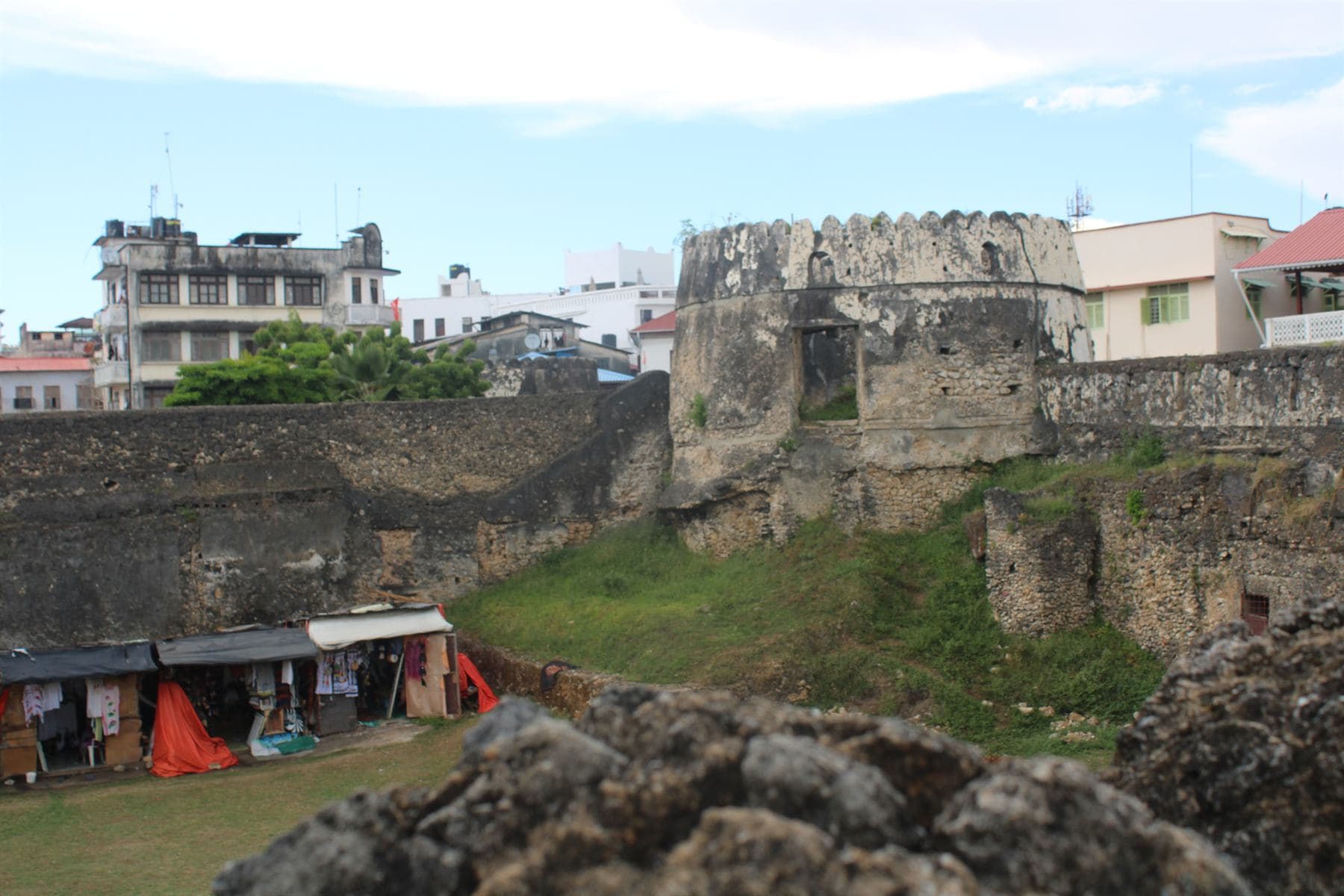
HP-A-012
The Old Fort
Stone Town, Zanzibar2021
Photograph · Photographer unrecorded
Seven domains of sovereignty
Human Sovereignty
Which decisions stay with people?
The decisions in your operation that a machine may never make alone, and the named humans accountable for the ones it assists with.
Data Sovereignty
Where does your information go, and who can get it back?
What information leaves your control, which third parties receive it, how long anyone keeps it, and whether you can get it out or have it deleted.
Cultural Sovereignty
Who holds authority over community knowledge?
Whether knowledge belonging to a community — stories, language, practice, imagery, ceremony — can be entered into systems that will reproduce it without permission.
Economic Sovereignty
Who captures the value this creates?
Whether the efficiency you gain accrues to you, and whether you could leave a vendor without losing your operation.
Creative Sovereignty
Who owns what gets made?
Rights, attribution, likeness and consent in anything produced with these systems — yours and other people's.
Community Sovereignty
Who is affected, and did they get a say?
Whether the people your work touches had any voice in how these systems are used on them.
Ecological Sovereignty
What does this cost the ground it stands on?
The material footprint of the computation you commission, and whether the scale of use matches the scale of the problem.
What an engagement looks like
Organizational AI Capacity
In developmentGovernance, training and implementation for organisations that need this to survive a staff change.
Built for the documented reality rather than the pitch: nearly every nonprofit already uses AI, very few see measurable impact, and roughly half have no governance policy at all. This engagement addresses ownership, documentation and policy first, and tooling second.
- Price
- $5,000–$20,000
- Timescale
- Six to twelve weeks
Scaled to nonprofit budget realities, informed by the same 2026 implementation benchmarks.
What you get
- An adoptable AI use policy, written for your board as well as your staff
- Staff training differentiated by role, not one generic session
- Two documented workflows in production
- A data-handling review covering donor, client and beneficiary information
- An internal knowledge base so the practice survives turnover
Not included
- Grant writing or fundraising delivery
- Anything presented as a fix for underfunding, understaffing, or burnout — those are structural problems and AI does not touch them
AI Readiness Assessment
A structured audit of your opportunities, your risks, and your actual capacity to carry a change.
Most organisations do not fail at AI because the tools are bad. They fail because nobody owns the work, the data situation was never examined, and no one wrote down what worked. This assessment covers all three: where the leverage is, where the exposure is, and whether your team has the bandwidth to hold a new system once it exists.
- Price
- $1,500–$8,000
- Timescale
- Two to three weeks
Priced below the documented 2026 market range of $2,000–$15,000 for comparable SMB assessments. Scope, not discount, drives where you land in the band.
What you get
- Workflow and time audit across the functions you nominate
- Opportunity register, ranked by effort against realistic benefit
- Risk and data-exposure review, including what must never enter a third-party model
- Capacity assessment: who would own this work, and do they have the hours
- Heirloom Shield review across the seven sovereignty domains
- A findings session with your team, recorded if you want it
Not included
- Building or configuring the systems identified (that is a Systems Build)
- Staff training delivery (available separately)
- Vendor contract negotiation or legal review
Institutions and funders
Where we are, plainly
Heirloom Praxis is a new institution. We have no published case studies yet, no institutional clients to name, and no procurement track record — and you should be suspicious of a young organisation that claims otherwise.
What we do have is a documented method, a published governance framework, transparent pricing benchmarked against the open market, and a founder with genuine standing in the communities this serves. If that is the right stage for you to engage at, we would like to talk.
Start a conversationProcurement readiness
Institutional contracting normally requires a UEI and SAM.gov registration, liability and cyber insurance, a data-processing agreement, supplier-diversity certification and documented past performance. That infrastructure is being assembled deliberately rather than scrambled together in response to an RFP.
If you have a requirement with a deadline, ask us where we actually are against it. You will get a straight answer, including where the answer is “not yet”.